That title, syllable types to morphemic analysis, sure sounds intimidating, doesn’t it? Well, grab a cup of coffee and let’s have a little chat about morphemic analysis.

*I am a participant in the Amazon Services LLC Associates Program, an affiliate advertising program designed to provide a means for me to earn fees by linking to Amazon.com and affiliated sites.
Learning about Syllable Types
When my oldest was in mid-second grade, I realized I needed to help move him beyond single-syllable words to reading longer words. Because he was a struggling reader, I did some serious research through the textbooks I had from my M.Ed. in Reading, specifically Words Their Way {my mentor and professor was one of the co-authors}.
I realized rather quickly that he needed to learn about syllable types. Recognizing syllable types is what can help learners take two closed single-syllable words like kit and ten to read kitten. Understanding syllable types can also help learners understand the reason behind the pronunciation and spelling difference in super and supper.
There are six main syllable types, nearly all of which mimic the phonics patterns found in one-syllable words:
- Closed Syllables {cat, kitten}
- Open Syllables {hi, hero}
- CVCe syllables {cake, homemade}
- R-controlled Syllables {far, burger}
- Vowel Team Syllables {keep, oatmeal}
- Final Stable or C+LE Syllables {table, turtle}
Another one that isn’t as common is V/V Syllables found in the two-syllable words lion or poet.
I’ve shared A LOT on this blog over the years about syllable types. I have many printables and an entire YouTube series on them as well.
Fast forward MANY years later {that same kiddo is about to enter his second year of college, if that gives you perspective}, and I realized that my youngest kiddo needed to move beyond syllable types to something else. But what?
Enter morphemes and morphemic analysis.
Learning About Morphemic Analysis
Morphemes are the meaning “chunks” in words.
Here are a few examples:
- Base words are “free morphemes” that can stand alone without needing any additional morphemes. {Speech to Print, Moats} These include words such as cake, nap, baby, or shout.
- Prefixes are meaning chunks added to the beginning of words like un-, re-, or dis-. When un, for example, is added to the beginning of happy, you get the word unhappy. The meaning of the word changes.
- Suffixes are meaning chunks added to the end of words such as -ing, -ed, and -er. For example, when -ed is added to the end of jump {jumped}, the verb is changed to past tense.
- Greek roots like photo, therm, or cycl are morphemes that come from the Greek language. For example, words containing the root cycl relate a circle. {bicycle, cycle, etc.}
- Latin stems like aud, mal, or terra are also meaning chunks that come from, you guessed it, Latin. Words containing aud, for example, relate to hearing. {audience, audible, etc.}
Morpheme analysis has more to do with teaching our learners to look for the morphemes {or meaning “chunks”} in words instead of breaking words apart by syllable types. This is especially helpful as learners encounter words with more than just two syllables.

The difference between focusing on syllables vs. morphemes is made apparent with a word like misusing. Breaking it into syllable types would result in this division: MIS – U – SING.
But when we move into teaching kids to be aware of morphemes, we begin to teach learners to look for the meaning “chunks” in words such as prefixes, suffixes, base words, roots, and stems. So, when learners break apart misusing by its morphemes, they would instead get MIS – US – ING, with the e dropped in the base word use.
With this method, learners are recognizing the multisyllabic word by its morphemes or meaning “chunks”: prefix + base word + suffix.
As you can see, teaching learners to read words by their morpheme “chunks” adds an extra layer of word meaning to their word study, which plays right into vocabulary and comprehension. Yes, please!
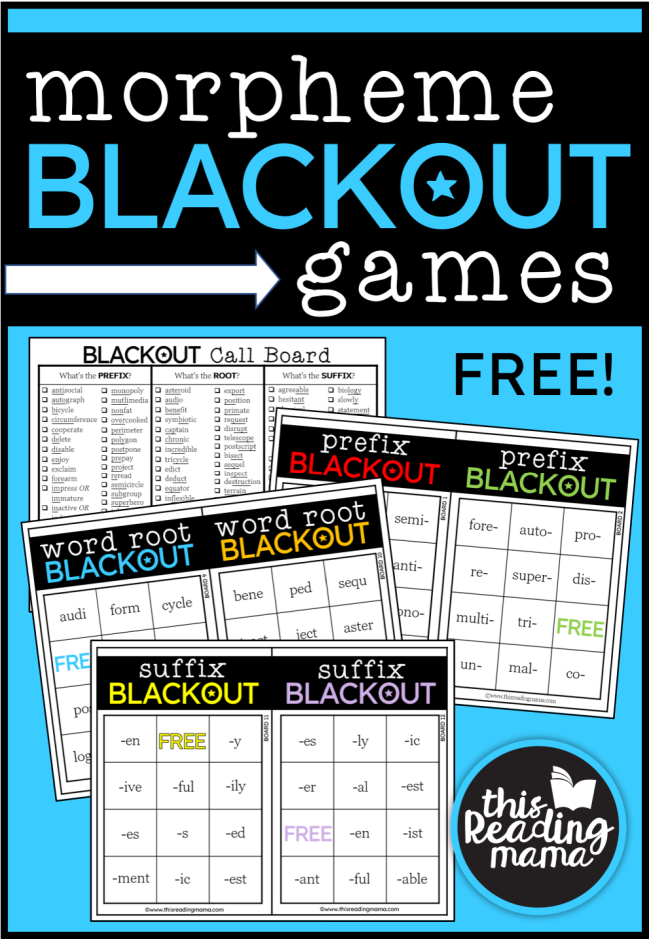
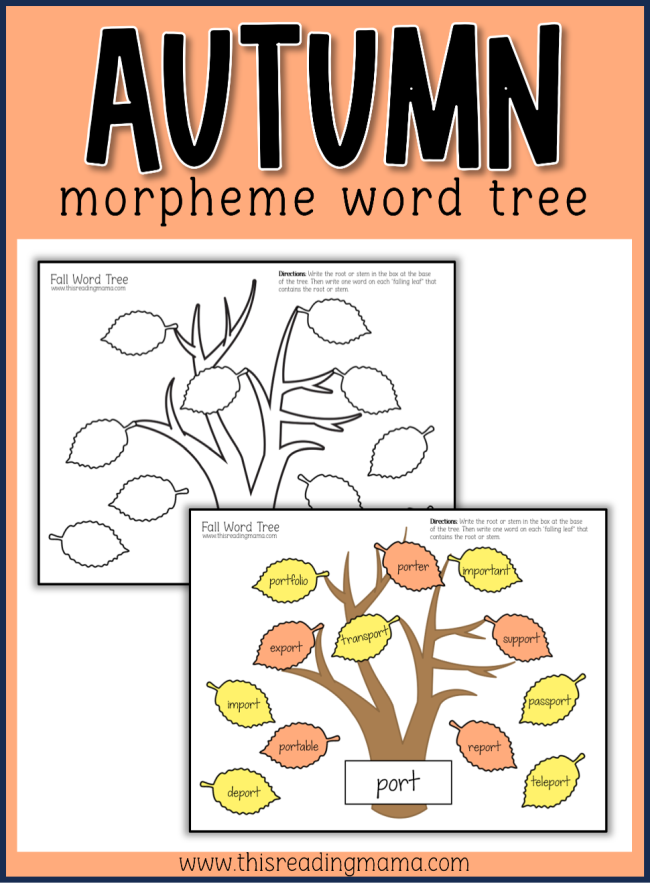
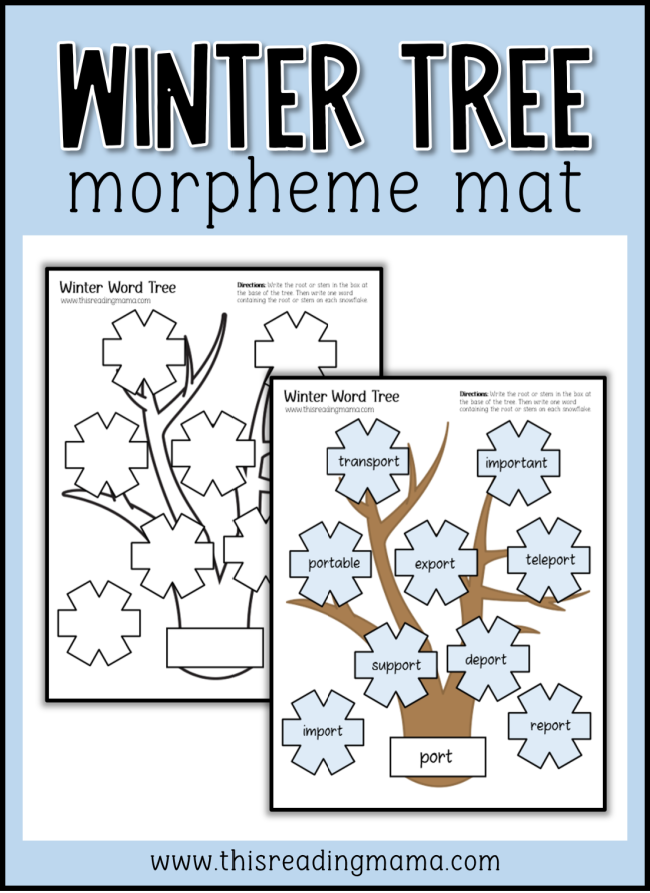
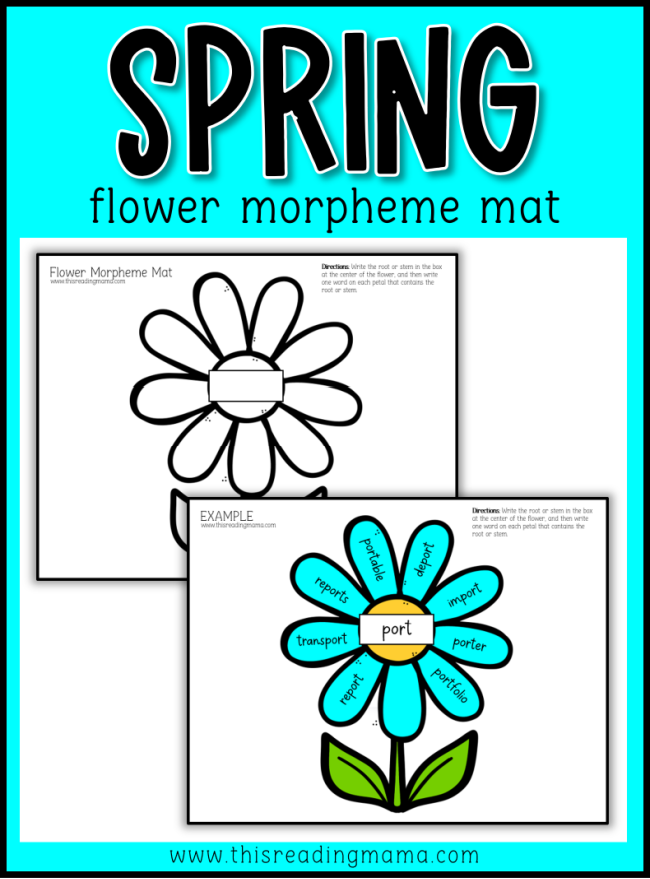
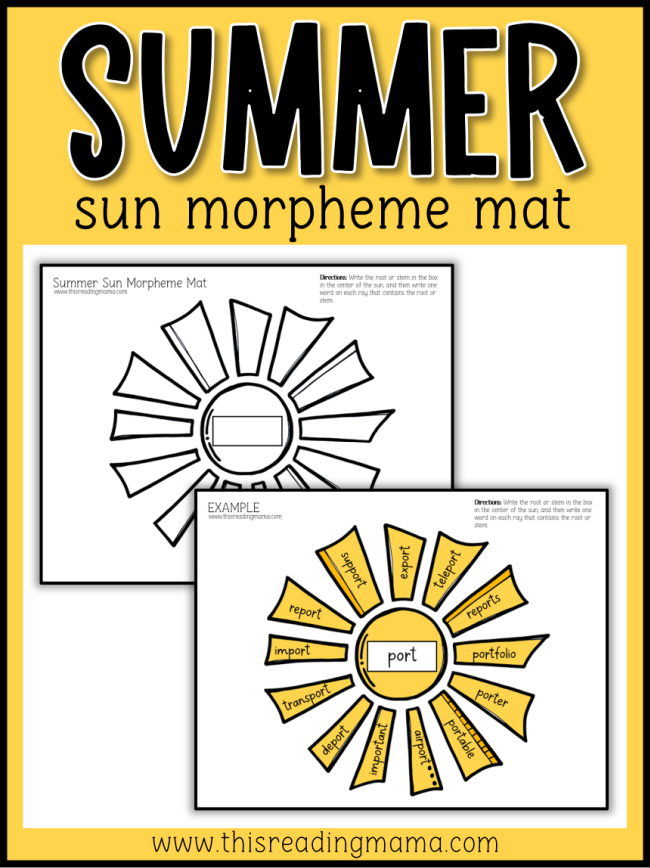
Want more resources to help you with Morphology?
Click on any of these below!


Enjoy teaching!
~Becky
Leave a Reply